Designing a miner, hauler or explorer in Main Sequence
Choose a trial run before choosing modules. A miner needs to bring ore aboard, a hauler needs to deliver a useful load between two docks, and an explorer needs enough fuel and access to its drive to get home.
Start with a hull you can build
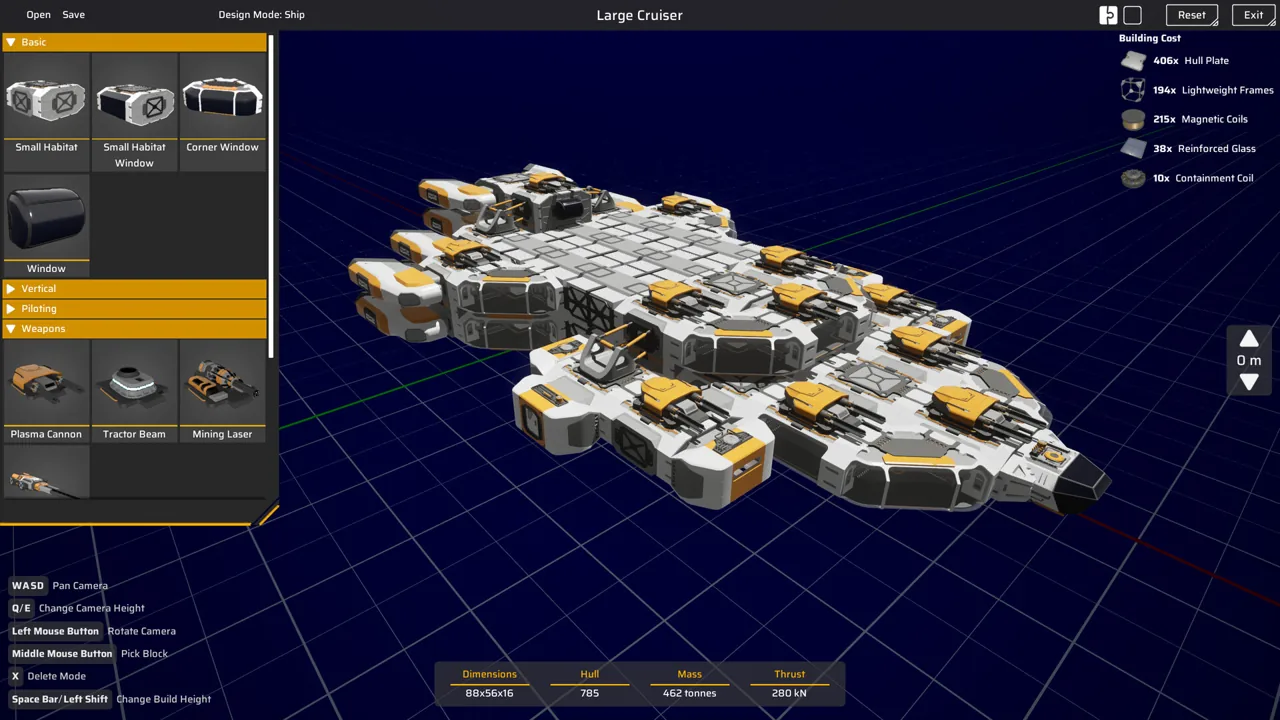
To edit an existing ship, dock it at the Shipyard and open the Designer there. To build a separate ship, use the Shipyard Core’s new-ship option. Surtr built a Scout this way in Early Access, then had to arrange fuel for it. Check Building Cost before committing materials. Compare Mass, Thrust and Dimensions before and after adding modules, especially if the hull already fits a tight berth. Developer’s Designer overview. Scout construction at 1:06:26. Official Designer screenshot.

Fit the ship for its first job
- Miner. Keep a mining laser, a way to collect the fragments and room in the hold. The starter ship provides a working reference. In the launch-day run, the pilot broke up titanium, used the tractor beam and confirmed the ore count aboard before searching for nickel. Repeat that sequence on one asteroid after a refit. If the rock breaks but the hold stays empty, check collection before adding another laser. Watch the titanium pickup.
- Hauler. Size the hold for one shipment on your supply route. Fly both berths before adding capacity. An Early Access freighter with a second deck could use a regular dock but bounced off an industrial one. If the hull fits and the ship still spends most of its run unloading, time the receiving belt before fitting another container. Freighter pilot’s docking report.
- Explorer. For a trip across the starting system, plan around the Slipstream Drive. Keep it accessible from inside the ship and carry Warp Fuel for the return. In one Early Access trip to a trading outpost, the pilot specifically checked access to the drive during the refit. Try a short outward leg first and read the fuel remaining before choosing the next destination. Watch the drive placement check.
Save the version that completes its run under a distinct blueprint name. If a later refit handles poorly, you’ll have the earlier hull’s mass, thrust and dimensions to compare.